Pages

Tuesday, 21 May 2013

More rules I could do without

Why are some writers so fond of rules? Why are some indie writers so fond of rules? Isn't one of the main benefits of self-pubbing that you don't have to toe the line any more?

Back in 2009/10 when I was submitting Remix to agents, there were more rules than you could shake a stick at, and writers would anxiously obsess over them on forums. Double spacing yes, but should we really use ugly Courier or was Times New Roman acceptable? Agents, we knew, were captious and huffy creatures.  There were lots of crimes that would result in an agent tossing your three chapters unread into the bin. These included omitting to enclose a self-addressed stamped envelope (I forgot once, and sure enough, didn't get the form rejection I was looking forward to adding to my collection). You had to study the agent's precise requirements and observe them to the letter, or she wouldn't even curl her pretty lip over your typescript.

We all did what we were told. To be fair, until Amazon changed everything we had no choice. (I may say it's still going on - read Carol Blake's handy list of 29 Ways NOT To Submit To An Agent. Reading that made me realize just how much I love not being a part of that scene any more.)

What irks me now is indies coming up with their own rules. Our book, we are told, will not be ready to publish until we have hired a professional editor, proofreader, formatter and cover designer. Not may not, but will notFleur Philips goes further: “One thing I feel indie or self pub authors MUST do for publicity and marketing is to hire a really good publicity firm to handle marketing and public relations ... if you can’t afford it, find a way to make it happen!” (Plih. Bog off, Fleur.) Others tell us we must write several books a year to succeed, and divide our time between marketing and writing.

To which I say, we are big grown-up indies. I can decide for myself whether or not I need to pay a proofreader (not, actually) and do all that other stuff. I do not need the new orthodoxy telling me what to do, and neither do you.

Friday, 3 May 2013

Lessons for Big Publishing from Kodak

Whatever happened to Kodak? Recently I treated myself to a new digital camera (a Canon ixus 500 HS, since you ask, and I'm very pleased with it). This morning a thought popped into my head; why, when I was browsing the internet for cameras, were there no Kodaks there?

At one time, Kodak was the big name in cameras and film. In 1900 they launched the Box Brownie at $1.00, which brought photography within the reach of the masses. The brand was huge throughout the twentieth century. 

Last year they went bankrupt.

I bet you didn't know that in 1975, a Kodak engineer called Steve Sasson created the first digital camera, which took photos with a modest 10,000 pixels. Kodak went on to patent many digital technologies which are used in modern cameras, but it wasn't till 1995 that they launched the DC40, their first digital camera. What happened next? Not a lot. Kodak was afraid of cannibalizing their own business - 90% of film sales, 85% of camera sales in the US - so digital was left on the back burner, while other manufacturers rushed in to fill the gap. Digital boomed, while legacy photography dwindled, and Kodak dwindled right along with it.

Does any of this sound familiar? When ereaders appeared, Big Publishing hoped they were a passing fad, ignored the opportunities digital offered, and colluded to keep ebook prices high so as not to impinge on print sales. Meanwhile Amazon flourished and self-publishers became a force to be reckoned with.

Let me quote Pete Pachal's conclusions from his interesting article on the subject:

"The most immediate takeaway from the fall of Kodak is clear: Don't be afraid to cannibalize your own business in the name of progress. This is seen time and again in the digital revolution: Sony's reluctance to develop a competent digital Walkman left an opening for the iPod. Blockbuster laughed off Netflix in the early days, then went bankrupt when it couldn't compete with its Web-based competitor. And iPads may be eating up some Mac sales, but Apple's bottom line is stronger than ever.

"True innovative spirit is much more often found in smaller companies and startups rather than old-school behemoths of yesteryear. After all, if you don't have much to lose, you tend to make many more all-in bets. But, as Kodak has shown, if all you do is play it safe, the cost just to stay in the game will whittle you down until you've got nothing left."

Sunday, 28 April 2013

Sequels, like pregnancy, are best planned...

The quickest way to succeed as an indie author these days is to write a series in a popular genre. Failing this, write consistently in one genre. (I speak as one who hasn't done either.)

I am often asked if there will be a sequel to my novels. If readers relate to your characters, naturally they want more of them. The problem is, Remix, Replica and Ice Diaries were written as stand-alone stories, and it's hellishly difficult to write a sequel you haven't planned for. We all know JK Rowling took five years to finish the first Harry Potter, as in order to write it she needed to have a good idea of what would happen in the next six volumes. This took time to work out.

Plenty of authors, after publishing a popular book, are prevailed on by readers, agents, and publishers to write a follow-up they never intended. There's also the enticement that it's the easiest way to ensure an eager readership for your next novel. And it's almost always a mistake. Here's my incomplete and arbitrary list of disappointing because unplanned sequels to brilliant novels:

  • Catriona, sequel to Kidnapped by Robert Louis Stevenson. RLS remarked in the Dedication, It is the fate of sequels to disappoint those who have waited for them, and he was not wrong. I've read it long ago, and can remember almost nothing about it, whereas I can recall every detail of Kidnapped.
  • Bridget Jones: The Edge of Reason, sequel to Bridget Jones by Helen Fielding, has some good bits in it, but suffers the usual problem of unplanned sequels. Having got hero and heroine satisfactorily together in Book 1, the author is obliged to split them up in Book 2 and get them together again, leaving the reader doubting this second happy ending would last. Also, to my mind, the balance of Bridget being clever and Bridget being stupid is wrong in the second book. She's too often stupid.
  • The Starlight Barking, sequel to 101 Dalmatians by Dodie Smith, is...how can I put this...barking. It involves all humans falling asleep at once, dogs levitating, and a visit from an extra-terrestrial dog called Sirius to rescue Earth's dogs from the possibility of nuclear war. Weird.
  • Predator's Gold, sequel to Mortal Engines by Philip Reeve. In the end, he wrote a quartet of books. Mortal Engines is a ground-breaking, absorbing and surprising read, but I'd have preferred the story to end there.
Films are no different. I only like the first Back to the Future and Planet of the Apes. The exception is Terminator 2, which I think is even better than Terminator 1. 

What do you think? Nominations?

Sunday, 14 April 2013

Could Big Publishing put up a website to compete with Amazon's?


Someone on KBoards started a thread about whether readers would flee to the Big Six (actually the Big Five now we have Random Penguin) for guidance as to what to read, faced with a flood of indie offerings of mixed merit. Perhaps they might band together and create their own website to rival Amazon, selling only quality books from approved writers? KB Burke's comment was so interesting I asked his permission to quote it here:

Just some observations from a software developer ...

The big publishers haven't figured out discoverability. Their talent pool means little when readers can't find the books. Just because they put 1,000 vetted writers on a site, doesn't mean I can find the 12 that I want to read.

To do that, they need years of buying behavior. The science behind 'also boughts' is called Collective Intelligence, and making the website is 10% of the battle. Basically, you model the mass behavior of people, and then identify patterns. 16 year old guys who bought Warhammer books, also bought Halo books. If you're 16, and have bought one of these things, you might like the other. And so on. It's statistics, but you need data to build the model.

This is why Amazon bought Goodreads, for the data. If the Big Six understood software engineering they would have bought that network years ago. Websites don't sell books. Data sells books, and the big publishers don't have the data to compete. They are 10 years late to the party.

This why Amazon is always tweaking their algorithms. They get more data and adjust their models. It's no different than a presidential campaign modeling an election by 'likely voters.'

Dozens of tech companies, with big time talent, like Apple and Google and Sony, have failed to compete with Amazon. They don't have data, but they do have some of the most talented engineers in the industry. Think about that. No one in New York will have anything like Google's resources, and Google isn't hurting Amazon at all.

As far as quality goes ...

There might be 100,000 bad indie titles, with quality issues, but it is probably a bell curve. Some percentage are high quality, 5-10%, that compete with the big publishers.

This has been true since the 1930s and the beginning of pulp. There is an ocean of crap, and a small handful of standouts. Who curates that crap doesn't matter. This is why word of mouth sells books. Amazon has made significant leaps in this regard, with their algorithms, but no one else is close.

The ocean is bigger today, but the model is the same as Edgar Rice Burrows. His books sold, despite that ocean of crap.

Collective Intelligence is really why Amazon dominates the book industry. The traditional publishers have a team of editors telling me they found another Edgar Rice Burrows. They are telling me what I should read. Meanwhile Amazon is telling me what people do read. People who like Burrows have also bought x, y and z. This helps me find my tribe, so to speak.

This is the now. The automation of white collar jobs, like book curation, and it won't ever go away. New York thinks good taste can't be automated, but that's because they don't understand the science.

Saturday, 6 April 2013

Agents' U-turn on self publishing

I'm sure we all remember that expression 'tsunami of crap' with reference to self-published books. Not sure where it originated, but the expression was bandied about a lot two or three years ago. An article in the Wall Street Journal by Eric Felton in July 2011 titled Cherish the Book Publishers - You'll Miss Them When They Are Gone bemoaned the fact that anyone could publish an ebook, and worse, sell it to a gullible public. 

Apparently Eric had a friend in publishing whose job it was to read the slush pile. In two years, she only found one 'marginally plausible submission' to pass on to her boss. (One does wonder how she kept her job, when she clearly wasn't any good at it.) And now, these appalling amateur books would be loosed on readers, who had hitherto enjoyed a limited selection pre-filtered by experts in publishing. It would be a disaster! Readers would be unable to cope! Good books would be drowned in a tsunami of crap!

I went to a meeting run by IPR License this week. There were two agents on the panel, Andrew Lownie and Louisa Pritchard, and both of them said that self-publishing, even for those intent on a traditional contract, was a sensible thing for an author to do. Sitting in the bus on the way home, it came to me just how enormous the changes have been in the publishing industry in the short time I've been writing. Though some don't like what they see as the new orthodoxy, and outposts of insanity like AbsoluteWrite will die rather than change their minds, among those who work in publishing there's been something of a 180 degree turn.

(I must say, I'm not at all sure about this being patted on the head by literary agents.  I rather liked being a wild free indie, an outcast from traditional publishing. Approval is not what I'm used to.)

Thursday, 28 March 2013

AUTHARIUM update

I've had an email from Simon Mayott, co-founder and CEO of Autharium, letting me know about major changes made to the contracts offered to writers who publish with them - and this new contract will also apply to existing Autharium writers.

The main change is that the contract no longer lasts for the life of the copyright of the book (the author's lifetime plus seventy years) but for ten years:

"By submitting your Work to Autharium and accepting these Terms & Conditions, you grant to Autharium the exclusive right and licence to produce, publish, promote, market and sell your Work in any Digital Book Form (as defined in paragraph 1.4 below) in all languages throughout the world for ten (10) years. After ten years, this Agreement will continue to roll until you email support@autharium.com to revert your rights and end this Agreement with 30 days notice."

The rights granted by the author include all digital forms, including those not yet invented, worldwide - but nothing else:

"For avoidance of doubt this does not include physical or audio book forms, videos, film, television, merchandise or game forms."

Provision is made for the site going bust or ceasing to function:

"This Agreement shall automatically terminate if and when:

(a)  a manager, receiver, or other encumbrancer takes possession of, or is appointed over the whole or any substantial part of, Autharium’s assets;

(b)  Autharium enters into any arrangement or composition with or for the benefit of its creditors (including any voluntary arrangement under the Insolvency Act 1986); or

(c)  a petition is presented or a meeting is convened for the purpose of considering a resolution for the making of an administrative order, the winding up or dissolution of Autharium (otherwise than by way of a voluntary liquidation for the purpose of reconstruction)."

This is much, much better than the original deal offered. Simon Mayott says "this is the first UK publisher contract to step outside of the standard terms". But since Autharium is a new type of publisher, digital only and not paying advances, I'm not sure the comparison is valid - nor for that matter would I sign a boilerplate publishing contract.

Also, ten years is quite a long time, and I wouldn't want to hand over my rights for that term without the certain knowledge that the publisher would do a better job than I on my own (or any other publisher I might hope to interest) could. That said, credit to them for responding to criticism in such a positive way. I'm no longer calling them a scam, and hope they sell many books for their authors.

Wednesday, 20 March 2013

FAIRY DUST

I've spent the past two and a half years trying to work out what makes one book sell and not another, and ...

*SPOILER ALERT*

... I can, with confidence, disclose the results of my research: it's fairy dust.

Of course, it helps for your book to be well-written and gripping, and preferably one of a series. An enticing cover and blurb won't hurt. Many writers are enjoying modest success, making money and pleasing readers; but what is that extra something that fires people to tell their friends, post on Facebook or start forum discussions on Amazon? What makes people so obsessed with your characters that they write fanfic about them? I don't know, and interestingly, neither do the authors it happens to. 

Take Hugh Howey, the latest indie phenomenon. He didn't promote Wool at all. It started life as a short story, published on KDP and left to twiddle its thumbs while Hugh concentrated on selling his full length novels. The short story sold surprisingly well, and eager readers asked for more. The rest is history. Hugh is a shrewd guy, able to work out what he wants and hold out for it; he also comes across as both nice and engaging, with a good relationship with his fans. But he admits he never expected Wool's success. I can remember him saying a year or so ago on Kboards that he was doing quite well, but wasn't in Amanda Hocking's league. He probably is now.

You can read Hugh's analysis here. This is how he begins:

I wonder if lottery winners get emails asking for advice on how to win the next one [...] Every week, I get a handful of emails from aspiring authors asking for advice. They want to know how I found success with my writing, and I find myself admitting that luck played the biggest part.

For more on this topic, read Hugh Howey and the Bestseller Myth.

Monday, 11 March 2013

AUTHARIUM

NOTE: Since writing this post, Autharium has amended its terms. See my post here.
*  *  *  *  * 
Each day there seems to be a new shark circling eager newbie writers, hoping to make a killing. Autharium is the latest. Go to their site, and it all sounds most enticing - it's free, easy to join and load your work; publish with them and you will have 'global distribution' and keep 85% of your earnings!

Too good to be true? Yup.

Go to the Author Publishing Terms and Conditions and you will find:

By submitting your Work to Autharium and accepting these Terms & Conditions, you grant to Autharium the exclusive right and licence to produce, publish, promote, market and sell your Work in any Digital Form (as defined in paragraph 1.4 below) in all languages throughout the world for the entire legal term of copyright (and any and all extensions, renewals and revivals of the term of copyright).

What is the legal term of copyright? The author's lifetime, plus seventy years. So by publishing a novel on Autharium, you hand over the worldwide digital rights, including film, games, apps [see edit below], and means of transmission yet to be invented,  until seventy years after you die.

The site tries to fudge this by assuring you that The copyright in your work shall remain your property. Quite what good this will do you when you have ceded all rights to them they do not say. They do say:

Please note that your removal of your Work from sale in accordance with paragraph 13.1 above will not terminate this Agreement nor cause the exclusive digital publishing rights that you have granted to Autharium pursuant to paragraph 1 above to revert to you

Also:

If you wish to sell your Work in any Digital Form through any other publisher, distributor or means then you will need to contact Autharium at support@autharium.com to agree transfer of the digital publishing rights to your Work.

So if you decide you will do better selling via Amazon's KDP, or are offered a six-figure deal from a publisher, or someone is interested in buying the film rights, you will have to persuade Autharium to release you from its contract. For a large sum of money, no doubt. Or you could decide the contract is so one-sided it may be unenforceable; in which case you face years of stressful and expensive litigation.

I think Autharium is playing a numbers game. Recruit enough writers to sign that contract, and the odds of one of them turning out to be the next E.L. James and making the site owners a fortune are really not bad at all.

Autharium? Avoid, and tell your friends.

N.B. For more information, see The Passive Voice, where I read this story.

EDIT: I've just had a long phone conversation with Simon Maylott, one of the founders of Autharium. He tells me that their contract does not cover film, games or app rights. He also defended the contract as being in line with traditional publishing contracts. The problem is, traditional publishing contracts are not generally fair to the author - read a lawyer's opinion here. I don't believe Autharium is consciously attempting to dupe the vulnerable, or that its owners are villains. But the legal term of copyright is a very long time, and who will be dealing with those contracts in thirty or forty years? Supposing Autharium is successful, and is bought out by someone less scrupulous? If the deal they offer is good, and their authors happy with it, their terms do not need to be so stringent. 

EDIT 2: Having now looked at some books epublished by Autharium, I can say their proofreading, formatting and cover design do not strike me as being of a professional standard.

Wednesday, 6 March 2013

Don't use Times New Roman on your book cover - ever

Covers are probably THE most important selling tool for your book, because we are all more influenced by presentation than we think. As a designer, I'm well aware of this, but I still remember when my daughter was four coming across a delightful photo in the Mothercare catalogue of a small girl on a beach wearing a banana-yellow tracksuit. I knew there was nothing exceptional about the garment, I knew I was being seduced by the image - but I ordered the tracksuit just the same.

A browsing reader will first be attracted by your cover; will then read the blurb, the reviews and the sample. If these all pass muster, you've got a sale.

I've always designed my own covers because it's fun, and boy, were the first ones bad. As I've got my eye in and developed my Photoshop skills they've improved (I was thrilled when Joel Friedlander approved Ice Diaries' cover). I'm not sure I've mastered making the genre clear - but then my novels are cross-genre which makes them trickier. My earliest efforts weren't for publication, but for the peer review sites, YouWriteOn and Authonomy, so perhaps their poor quality is forgiveable. I'd have posted an example, embarrassing though they are, but seem to have deleted the early ones. I reckon I've made every newbie mistake going; red on black lettering, saving in jpeg (why has it gone all fuzzy?) and using Times New Roman as my title font. TNR over a muddy photograph or a DIY drawing screams indie, and not in a good way.

I'm all for doing everything you can yourself when you self-publish. You will move into profit more quickly, learn a lot, and often do a better job than paid professionals simply because you care more. But if you have no design background and don't find it interesting, then you are ill-advised to design your own cover. A well-meaning friend may offer to have a go, but do not accept unless you feel a) you can ask him/her for alterations if it's not quite right, and b) you won't feel obliged to use it if it's dire. 

Tuesday, 19 February 2013

Crisps and Chips - UK and US English

Yesterday evening I was delighted to have a Skype discussion with a book club in Defiance, Ohio, (how cool a name is that for a town?) who were reading Remix. It's awesome not only to be able to chat to readers across the Atlantic, but to see them on screen.

Karen, who contacted me, had made a list of unfamiliar British expressions she'd come across in my novel; she and the other members guessed the meaning then I attempted to give a definition. What struck me was how many words in use here are unknown over there - so many that I now have a new respect for my American readers. I knew about the obvious ones, like tap and faucet, boot and trunk, trousers and pants, but that's not the half of it.

One word I'd already learned about and have avoided in my later books is "jumper". In America, a jumper is a sleeveless dress worn over a blouse or sweater or a child's garment consisting of straight-legged pants attached to a biblike bodice. When Caz pulls on a sloppy jumper over her dress US readers are not visualizing her outfit as I see it. I now stick to sweater.

Jeff Pike was responsible for the most incomprehensible words as he uses slang and swears a lot. Examples: "can't be arsed," "I don't give a toss," "saddo", "tosser", "poncey", "gaff". Caz's vocabulary is milder, but "Bog off" and "bally" were puzzling.

I didn't know that in America a plaster is a bandaid.  A torch is a flashlight. Karen explained that a torch means a flaming brand; the advantage is theirs, as we have to make do with one word for both. Chocolate digestives are unknown in the US, and I struggled to explain why they are called digestives (possibly advertised as good for the digestion?)

Parkour and ligger are perhaps a little obscure even in this country. Still, what good is a book if you don't learn the odd new word from it?

Tuesday, 12 February 2013

Conduct becoming a writer

Once upon a time authors were mysterious beings, recognizable to their readers only by a black and white photograph on the inside flap of a hardback cover, or occasionally at book signings. The internet has changed all that. Most writers have websites, Facebook pages, blogs and twitter accounts; we are there to be found by anyone who is interested.

We also have the opportunity to disgrace ourselves like never before, achieving instant fame of a really, really undesirable kind (see this Guardian article on poor Jacqueline Howett).  Here are a few things I've learned about appearing on the internet...
  • It's not good to get into rows on forums. If things start to get heated I wander off and do some useful task like the washing up. I don't have to have the last word.
  • About reviews - even the wrongest person from Planet Wrong is entitled to his opinion.
  • Bear in mind that people you write about will come across your remarks.
  • No one needs to know what your politics are, or your religion come to that. It may put them off, even if you aren't National Front and Wicca (with apologies to all witches).
  • Being polite and helpful is a Good Thing. It's also good for your image.
  • Moaning and grumbling are to be avoided.
What would you add?

Friday, 18 January 2013

The appeal of post-apocalyptic fiction

Having recently published Ice Diaries, which tells the story of a small group of survivors in a 2018 London under twenty metres of snow, I got to wondering about the popularity of post-apocalyptic novels. Why are we so willing to imagine the end of our civilization, when for most of us in the West we have never had it so good?

What is the attraction of losing everything that makes our lives easy and getting back to basics - sometimes with added zombies?

Here are my theories as to why we find a post-apocalyptic scenario appealing:
  • In an increasingly Nanny state, the disappearance of tiresome rules and bureaucracy. No more parking tickets or obsessively checking the speedometer to avoid a fine or remembering to put the rubbish out on a Friday, after 5.30 but not before.
  • The chance to have adventures and move out of one's comfort zone. Farewell nine to five.
  • The novelty of being in a familiar setting but under hugely different circumstances.
  • There is a looter and pillager deep in all of us, just waiting for an opportunity. The collapse of civilization makes looting acceptable, even necessary.
  • You can, like my heroine Tori, get to choose an opulent flat to live in that you could never normally afford.
  • Having to be resourceful, and having more control over one's life.
  • Immediate and rough justice, instead of our flawed and expensive judicial system - whose results often, after an agonizingly long wait, amount to rough justice.
  • The planet getting a rest from its biggest depradator, man.

Tuesday, 15 January 2013

ICE DIARIES ~ the paperback


Yesterday the first paperbacks of Ice Diaries arrived. Always an anxious moment, opening the package; I'd got the margins wrong on the proof copy, which meant a lot of reformatting. I was confident enough not to pay £21 for another proof, but the odd doubt lingered. I enjoy formatting for print (I do it on Word, not owning InDesign) and this time I succumbed to the lure of dropped caps. The books look good and I'm rather proud.

Though digital is undoubtedly the future, there will always be a market for print editions, and as an author I like to have a physical copy of my books.

You can buy Ice Diaries on Amazon UK for £6.99 with free postage, or $10.99 on Amazon US.

Wednesday, 2 January 2013

Persistence

2012 has been a good year for me

My novels have been selling steadily, if not in the huge quantities they did in 2010/11, bringing my total ebook sales to over 60,000. I published a new novel. I've recently had a nice run of enthusiastic reviews, and for a writer nothing is more rewarding than knowing readers have enjoyed your books.

So I had intended to write an assessment of the highs and lows of 2012, plus hopes and predictions for 2013. It was going to be all bullet points - you'd have loved it. I did the illustration specially.

But then I changed my mind and decided to write briefly about persistence. Because in an overcrowded and competitive marketplace, persistence probably matters more than anything, including talent. It's so easy to get discouraged as a writer; sometimes the effort seems pointless. But just keeping going as others fall by the wayside puts you in an elite group, and it's from that group that successful and famous authors will emerge.

Here's a toast to 2013: health, happiness and success!

Monday, 24 December 2012

Sunday, 23 December 2012

Swoon - you may when you read the contract


SW♥♥N will be launched next spring by MacMillan Children's Publishing. It sounds a bit like a YA version of Authonomy; writers will load their unpublished novels, and other members will vote on them. The inducement is that MacMillan may publish successful books. 

Anyone like me who has experience of Authonomy will view this project with a jaundiced eye. Writers are a desperate lot, and many will do anything for a chance of publication. This means it is very easy to attract them to a site run by an established publisher, and very difficult to stop them gaming the system. Another problem is that editors think they know better than readers, and tend not to put much faith in the wisdom of crowds, even when that is what they set out to do. Plus these sites are time-sinks, using energy that would be better spent writing or self-publishing.

For the 'lucky' chosen authors, this is what they will get:

Once a manuscript is chosen by the community and the SW♥♥N Reads publishing team, the author will receive a $10,000 advance and a standard royalty-based publishing contract for world rights, including the following royalty rates:
  • Hardcover – 10% of list price
  • Trade Paperback – 6% of list price
  • Paper Over Board – 8% of list price
  • Mass Market Paperback – 6% of list price
  • E-book – 25% of amount received
  • Graphic Book – 6% of list price
  • Electronic Graphic Book – 10% of amount received
  • Audio – 10% of amount received
  • Digital Audio – 20% of amount received
  • Multimedia/Gaming – 10% of amount received
So other people will take between 90% and 94% of the profits of each print book, leaving 6 - 10% for the author. For ebooks, which cost nothing at point of sale, the publisher takes three quarters of the 'amount received'. They will own world rights, and modern publishing contracts take the rights for a very, very long time.

Stingy and mean are words that come to mind. Exploitative, that's another. It's depressing to think that plenty of writers will view this as an opportunity.


Sunday, 16 December 2012

Are publishers missing a trick?

Steven Pressfield wrote a fascinating article going into the financial details of two recent book deals; EL James's, which has received major publicity, and Hugh Howey's, which passed almost unremarked by journalists. But it's Hugh's publishing contract which may change the face of publishing. 

Here it is in Hugh's own words:

"After three rounds of publishers winking, flirting, and making passes at WOOL this year -- after a dozen or so offers that I would've fallen over myself to accept earlier in my career -- after walking away from two 7-figure deals last month that would've meant giving up all control of my publishing future and all of my rights -- Simon and Schuster blew my agent and myself out of the water with a deal that is everything we've been looking for from the very beginning (and never expected to get).

"Less money. More respect. Ultimate freedom.

"This is the contract I've been hoping for, and not just for myself. To be honest, I didn't think it would happen to me. I thought this was a contract for the future -- for other authors. But my agent and I went into these several rounds of discussions telling each other that it was crucial to have these conversations with publishers so that they would get used to hearing what was important to authors. And what's important to authors isn't *always* large advances. We want long-term stability; we want to retain our rights; we want the freedom to publish our way; we think digital rights should either remain in our hands or pay a whole lot better. 

"By keeping my digital rights, I'll be able to retain the sensible (i.e. cheap) price of my ebooks so that they will (hopefully) continue to sell. I can lower the price and do promotions anytime I want. I can see my sales in real-time like I always have so I know what works and what doesn't. I can keep the first book at perma-free. 

"Simon and Schuster, meanwhile, will do what they do best: they are releasing WOOL in March. They are also doing something awesome here at my behest (read: begging) by releasing the hardback and paperback simultaneously! This means a major push with an affordable paperback in bookstores, with a hardback available for libraries and the handful of people who might prefer one (i.e. my mother). 

"We were told by other major publishers that they don't ever see doing print-only deals. When I praised Kristin [Hugh's agent] for pulling this off, she told me it was all about having a client willing to say 'no'. For three rounds, we turned down unfair contracts hidden behind large advances. What we ended up with in the end, of course, is far more valuable to me."

Hugh Howey is an outlier; his staggering success with Wool surprised even him. It started life as a short story he didn't bother to promote, and word of mouth made it a best-seller. Ridley Scott is to make the film version. Right now, only a stellar writer would be so much in demand that he can negotiate his own terms. But I've often thought, if an indie author can sell significant numbers of ebooks, there remains a virtually untapped market (still the major part of the market) for his print books. Why aren't publishers making print deals with authors with a proven sales record? These books are as safe a bet as you'll find in publishing.

If I, all on my own, doing my own proofreading, editing, formatting, cover and marketing, can sell over 40,000 copies of Remix, how many print copies could a publisher sell? And there are hundreds of self-publishers who have done better than me with ebooks, while barely scraping the surface of print sales. This is a huge opportunity, currently wasted.

Wednesday, 5 December 2012

The problem with animals and pets in novels...


I've just finished reading Hollowland by Amanda Hocking. I felt I owed it to such a successful indie, a self-made millionaire by the age of twenty-eight, to check out a novel of hers. And this one is free.

Though I'm not the target reader, I rather enjoyed it, as the heroine is level-headed and ruthless on occasion and the story though episodic moves along briskly. It's the first zombie novel I've ever read. It ended when I wasn't expecting, but a) it's the first in a series and b) I was misled by the percentage read indicator - the Kindle edition included another book's extract at the end.

My major criticism was the lioness that the heroine, Remy, acquires along the way. She sees the animal trapped in a truck, releases her and calls her Ripley. Ripley turns out to be friendly towards humans, but eats zombies. And I took Ripley altogether too seriously. I worried a lot about her.

She has a chain attached to a collar round her neck. It bothered me that she has to drag this around for most of the book. It must have got in her way when tackling zombies. I fretted when she went for a swim - wouldn't the chain drag her under? One of the first things Remy does for the lioness is give her a drink. It's the only drink Ripley gets in the book, poor thing. She fends for herself whenever Remy's little group are away doing something, then magically reappears and jumps in their truck when they are off somewhere new. She's very convenient, no trouble at all.

Had I included a pet lion in a novel, I'd have reread Born Free and tried to make it as realistic as possible, because ideally an animal in a novel should be as convincing as the human characters. Just like a real pet, it is not to be undertaken lightly. For starters, you have to account for the darned thing the whole time. If you forget, your reader may fret. Instead of being gripped by your plot, she will be concerned the dog hasn't been taken for a walk in days, the parrot must be lonely, or what is that dragon living on?

Perhaps I'm too literal minded. Amanda's fans all think Ripley's cool, just the way she's written.

Sunday, 25 November 2012

Why fiction genres are a Bad Thing

Publishers and bookshop owners love genres

It makes their life so much easier, not just to know which shelf to put a book on, but also how to market it. Enjoyed last year's big steampunk hit? Then (handing over shiny new book) you'll love this steampunk novel that's just come out.

Newbie writers are told that to have a hope of securing an agent and a publisher, their novel must fit neatly inside a genre. Some genres, like Young Adult, have very restrictive rules. Apparently, teenagers can only relate to heroes their own age or a little older (luckily no one told me this when I was that age). But the 'rules' change. Sometimes a surprise hit makes publishers accept a new genre. Since Fifty Shades, we all know about Mommy Porn, God help us. Now Thursdays in the Park has sprung back to digital life and topped the charts after a lacklustre print launch a few years ago, we must expect an avalanche of Gran Lit. Because when publishers are not busy curating content, such a vital part of their jobs, they are pouncing on whatever seems likely to be the next big money-spinner.

I got to thinking about this while trying to decide what categories to put Ice Diaries into when loading it to Amazon's KDP.  Two years ago, you were allowed five. Now it's two, and for anyone whose novels cross genres this makes for hard choices. Fiction...that was easy. Now, Action & Adventure, Contemporary Romance, Romantic Suspense, Thrillers, or Science Fiction? Darned if I know. 

I recently started reading Divergent, because the sample looked promising. About 15% into the book it occurred to me, this is Harry Potter meets The Hunger Games, and I bet that's how the book was sold to a publisher, too. This thought was so off-putting I stopped reading.

Rigid genres are a bad thing, as bad as narrowly specifying ages on children's books. Readers don't really care about genres, even if they think they do. What readers want is an absorbing story that will take them away from their lives for a brief spell and preferably leave them with something to think about afterwards. That's all. 

Suppose publishers published only the best books, regardless of all other considerations? They'll never try it, but if they did, it just might be the answer to their current self-inflicted woes.

Sunday, 18 November 2012

How to format ebooks for Kindle KF8


When I realized Ice Diaries' formatting was not changing size/fonts correctly on the Paperwhite Kindle, I did some research and reformatted all my books using Kia Zi Shiru's method you can find here. It worked for me. I'm writing my own version hoping it may help other indie writers. Be warned, this is an exacting fiddly process that took me a day the first time - the second was quicker. If you want to see what the end product looks like by this method, download Ice Diaries' sample, or better still buy it :o)

IMPORTANT NOTE: to demonstrate without fusing Blogger, I have changed pointy brackets for square, i. e. < for [, and > for ]. If you are going to format my way, I'd advise pasting this post into Word and changing the brackets so you can copy and paste the codes into your HTML document. Print it, and you can cross off each stage as you go.
  • Make a new copy of your book in Word and call it 'TITLE for formatting'. Make sure the chapter headings are consistent, and the text is single-spaced. Remove any extraneous spaces at the ends of paragraphs by selecting the whole text, centre justify the selection and then left justify the selection. All the extra spaces will disappear. Do a Search and Replace replacing two spaces with one. Mark each pagebreak PB on its own line. If you have words in the text in bold and underlined, mark them with # - locate by clicking Ctrl b or Ctrl u in Find. Don't mark titles, just the text.
  • To format italics, go to Search and Replace. Leave the search box blank, but in the Find/Replace dialogue box, under the Replace box, is a More button. Click it, then click Format at the bottom of the box. From the list that pops up select Font, and from that dialogue box, under Font Style, select Italic. In the replace box put:
    [I]^&[/I] (remember to change the brackets)
    Click Replace All.
  • Download Libre Office and Notepad++  which are free.
  • Copy your Word document into Notepad++ in order to strip the formatting.
  • Copy the text from Notepad++, open a new document in Libre Office and paste it in. Libre Office is good because unlike Word, it produces nice clean HTML. Close the Notepad++ file without saving, as you have finished with it now.
  • Change the character set that LibreOffice uses for HTML, under Tools, Options, Load/Save, HTML compatibility. In the lower right there is Character set with a drop down menu next to it. Change this to Western Europe (ASCII/US).
  • Go to File, Save As and save as TITLE html, as an HTML Document (Writer) (.html) from the drop down menu. When asked if you are sure, you are.
  • At this stage, your whole text should show as Default in the top left box. If it doesn't, Select All and change it to Default.
  • Go through the text making changes. Select the chapter headings and change them to Heading 1 in the box in the top left corner which otherwise says Default. I use H1 for the title on the title page, too. Don't bother centring at this point.
  • Select each chapter title, if you have them, and change them to Heading 2.
  • I change my name on the title page and Contents to bold.
  • Search for #, hit delete to remove #, and put in bold and underlined as indicated.
  • Table of Contents: Amazon requires this at the front of the book. Highlight the heading Chapter 1 at the start of your first chapter, go to Insert and click on Bookmark. Type in Chapter 1 and OK. Do this for all your chapter headings.
  • Go to your Table of Contents list. Click on Chapter 1. Go to Insert, Hyperlink. In the pop-up screen click on Document. Click on the circle with a dot on the second row, which opens a new pop-up. Click the + sign next to Bookmarks, and select Chapter 1. Click Apply, then Apply in the other window. Do this for all your chapters.
  • Select the title CONTENTS and add a bookmark; call it TOC. Bookmark where you want the book to start; call it Start. This is for Kindle navigation.
  • To add links to your website or other books, highlight, click Insert, Hyperlink, and click on Internet. Paste the URL of the site you want the link to go to, and click Apply.
  • Click File, Preview in Web Browser to check your links work. Don't worry that it looks kind of plain.
  • Open Notepad++, click File, Open and open your Libre document, 'TITLE html'.
  • Add your title in line 5, between the tags. Delete lines 7 and 8.
  • Look at the first of your [P] tags (Paragraph tags, in your normal text). Anything between the [P and the last ] can be cut; copy the whole tag and go to Search and Replace. Paste the whole tag in the top line, [P] in the bottom, and Replace all
  • Do the same for [H1] and [H2] tags, but leave the [A] tags well alone, as they are your link tags.
  • Go to everything coloured green between [STYLE] and [/STYLE], delete what is there and paste the following - but remember to change the square brackets in the code to < and >:

[STYLE] 

p { text-indent:1.2em;} { margin-top:0em; margin-bottom:0em; }

.center { text-indent:0em; text-align:center; }

.noindent {text-indent:0em;}

* {

margin: 0;

padding: 0;

}

[/STYLE]

  • Now to add the page breaks. Do Search and Replace all, replacing [P]PB[/P] with [mbp:pagebreak/]
  • Centre lines you want centred: to do this, add  class="center" between the first tag. So [P] becomes [P class="center"] (note there's a space after P) and [H1] becomes [H1 class="center"]. Do [H1] and [H2] all at once with Replace all. Woohoo!
  • If, like me, you like the first line of a chapter or scene with no indent, then you need to change [P] to [P  class="noindent"] where you want no indent. You will have to do each individually, I'm afraid.
  • Save, and open Kindle Previewer which you can download free here. Open your book and check every single page. Looks good? Then email the file to your own Kindle for a final read-through and check. If you find any problems, go back to the Notepad++ version and tweak.
  • You're done. Pat yourself on the back and have a stiff drink.

Sunday, 11 November 2012

Clicking Publish on Ice Diaries

I have now clicked Publish, and ICE DIARIES is available to buy (or indeed ignore, according to taste) on Amazon UK and US.

It's an extraordinary moment for any self-publisher. Traditional publishing is very different; your book won't be on sale until about two years after you write THE END. By that time you've probably written another couple of books and have almost forgotten the one you now have to promote.

For indies like me, it's all much more immediate, and the buck doesn't just stop here, it's in permanent residence. I really hope readers are going to enjoy the story of Tori and her life in a post-apocalyptic London. They'll let me know.

Here's a virtual toast to Ice Diaries - and readers, without whom writers would be nowhere.


N.B. I've loaded pictures relevant to the story here on my website.

Wednesday, 7 November 2012

Title, cover and blurb - your opinion?


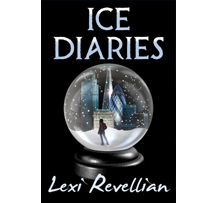
I'm nearly ready to publish my latest novel, and I'm doing my usual dithering over the title. Ice Diaries and Snow Globe are the current contenders. So I thought I'd ask you, my trusty blog readers, for your opinion. While you are here, would you cast an eye over the cover - figure/no figure - and the blurb for Amazon too?


BLURB

It’s 2018 and Tory’s managing. Okay, so London is under twenty metres of snow, almost everybody has died in a pandemic or been airlifted south, and the only animals around are rats. Plus her boyfriend never returned from going to find his parents a year ago when the snow began. But she’s doing fine. Really.

Home is an apartment that’s luxurious, if short on amenities, in a block which used to be home to rich City bankers. A handful of fellow survivors are her friends, and together they forage for food and firewood, have parties once a month and even run a book club. It’s all very civilized. The problem is that long-term they have no future; eventually the food will run out. Tory needs to find a way to make the two-thousand-mile journey south to a warm climate and start again.

Enter Morgan, a disturbingly hot cage fighter from a tougher, meaner world where it’s a mistake to trust people. He’s on the run from Mike, leader of the gang he used to work with. And he has a snowmobile.

Thursday, 1 November 2012

No paid professional will care as much as you do

I'm sure you all recognize the quote...
Passive Guy posted recently from a US agent's blog a piece entitled Why agents collect your money for you

The agent, Janet Kobobel Grant, explained that having publishers send the entire amount to the agent, instead of her 15% commission to her and the author's share to the author, was really for the author's benefit. She could check the amount (she didn't explain why a statement wouldn't do just as well) thus saving the author "happily skipping off to the bank to deposit an incorrect check".

This picture of the naive little author saying, "Ooh! Money!" and in her enthusiasm failing to notice it was the wrong amount is typical of the patronizing way writers are treated by the publishing industry.  We are told there are all sorts of things we can't possibly do for ourselves, so we need to pay most of our earnings to others in order to get them done for us. Of course this learned helplessness is handy for getting rights-grab contracts signed - don't worry your pretty little head with the details, just sign on the dotted line.

When dealing with professionals, it's best to bear in mind that you care an awful lot more about your job than they do. Whether it's a plumber, a solicitor or a literary agent, to them you are just one customer among many. 

I've learned not to let other people do my thinking for me. I still remember the time I paid a for an opinion from a QC on the advice of my solicitor. The combined hourly charge was mind-boggling. I mentioned a possible problem I'd noticed, and they shook their heads in unison while reassuring me. I turned out to be right, they were wrong; they moved on to the next client and I paid for their bad advice each month for the next nine years.

Look at the comments on Janet Kobobel Grant's page from grateful authors agreeing with her. Then check out the comments beneath Passive Guy's post. It's herbivores and carnivores.

Don't be a herbivore. They'll chew you up and spit you out.

Sunday, 21 October 2012

Excellent Editing Software

Part of Ice Diaries on Pro Writing Aid
Yesterday I reached the end of the WIP, Ice Diaries. This is not quite as good as it sounds, as the last couple of chapters are sketchy and need more work, after which it has to go out to beta readers and have further adjustments, but it's still a pleasing moment. 

As well as improving the end and tweaking the whole novel, this is the stage when I put the text chapter by chapter through editing software. For me this is an essential process because of my word echo habit - I'm capable of repeating a word three times in a short blog comment. My awareness of the problem enables me to catch a lot of instances, but not all. I've used Autocrit for the past three years, but discovered my subscription lapsed in July, and it was $77 to renew. This struck me as too much - three years ago I paid $35. So I searched Google for an alternative, and found Pro Writing Aid.

And it's really good - I'm so enthusiastic about it I probably need to add that I am unaffiliated with PRW and if you click on the link I make no money. The design and layout are nice and clear, and the window you paste into is large. The software will check your prose for all sorts of things, most of which I won't be using, but Repeated Words and Phrases and Overused Words are invaluable to me. I especially love the way Repeated Words shows repeats in a range of pretty colours, so you can see the twins (or worse, triplets) at a glance.

Best of all, Pro Writing Aid is free. Woot!

Wednesday, 10 October 2012

How many words a day do you write?

There's a terrifying thread on Kindleboards on this topic calculated to make the average writer feel inadequate. Here are a few sample comments:

"In a half hour session I can do up to 3k but 2,200 is my preferred comfortable pace. If I'm on deadline I get 15 - 20k done in a day. But 10k is my usual daily output if I'm working on something. But I have days where I'm just lazy."

"I tend to write in short bits, most days, say 500-1000 words. But I am a burst writer. My last four novels have had the final 20-25k words all written in one day."

"Under deadline, it can peak at 1k per hour some hours. Without a deadline, 3-4k per day."

"I write generally 1000 to 1400 words per 45 minute writing session.  I aim for at least 4k a day, but 7k is better. My best day ever was about 14,000 words."

I tell myself these writers belong to the majority who forge ahead with a first draft, not rereading or correcting till they get to the end, when they face an equally large task of editing from scratch. I hope so anyway, because my output is tiny compared to these.

With the WIP, Ice Diaries, I've kept track of my daily word total, and it averages just under 400 words a day. I was aiming for 500. But I edit and tweak a great deal as I go, so when I reach The End a book is polished enough to go straight out to the first beta reader. Writing at that rate it's possible to finish a novel in about six months. In theory.

I think there are some lucky prolific writers who are able to write multiple books a year that please their readers - Amanda Hocking is a current example - but they are quite rare. Most of us, if we are honest, take a lot longer to finish a book, and are well advised not to rush the process. But perhaps I'm just making excuses...

What do you think?